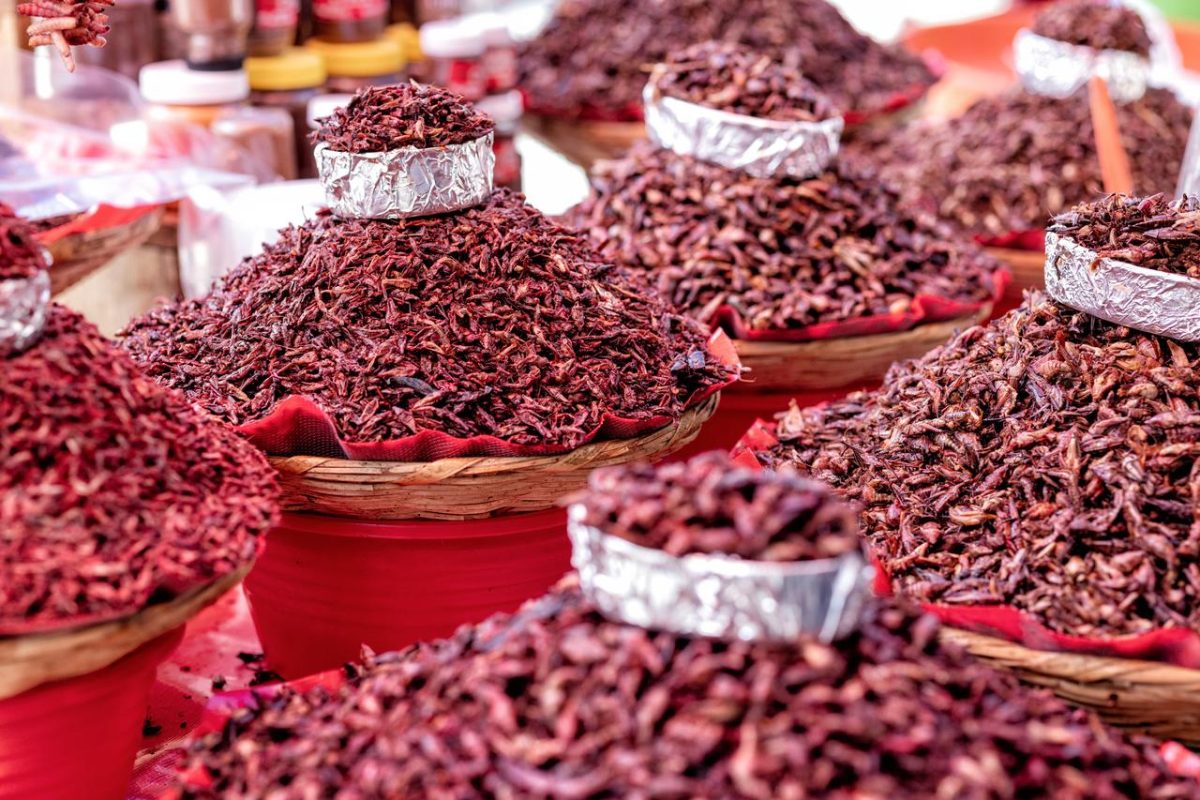
Toasted grasshoppers of the genus Sphenarium.
Chapulines have been a staple ingredient in Mexican cuisine for centuries, dating back to pre-Hispanic times. They are typically harvested from agricultural fields, where they are considered pests to crops, effectively turning an environmental problem into a valuable food source. Once collected, the insects are thoroughly cleaned and toasted on a comal (griddle) with garlic, lime juice, and salt, resulting in a crunchy, savory snack that is beloved for its distinctive tangy and spicy flavor profile.
While the consumption of insects is a global phenomenon, the specific tradition of eating chapulines is most deeply rooted in Mexico, particularly in the central and southern states such as Oaxaca, Puebla, and Morelos. In these regions, they are sold by the kilo in local markets and are commonly served as a bar snack alongside guacamole and tortillas, or used as a filling for tacos. Although grasshoppers are eaten in other nations—including Thailand, China, and parts of Africa—the term “chapulines” and the specific method of seasoning them with chili and lime is distinctively Mexican, though they have recently gained popularity in the United States and Europe as a sustainable gourmet trend.
Beyond their cultural significance and unique taste, chapulines are increasingly recognized as a nutritional powerhouse and an environmentally sustainable food source. They are incredibly high in protein, containing up to 70% protein by weight, and are rich in vitamins, minerals, and fiber. Compared to traditional livestock, farming grasshoppers requires significantly less water, land, and feed, and they produce minimal greenhouse gas emissions, making chapulines an attractive option for the future of food security in a warming world.